This article was written by members of SWASH.
"SWASH (Sex Work And Sexual Health) is a Japanese sex worker rights group that works to protect the health, safety, and rights of sex workers. Our main work is sharing useful information for sex workers through our website, akaikasa, which means “red umbrella” in Japanese. We are also currently working on a political campaign against the Nordic Model, the approach of criminalising the clients of sex workers.
In Japanese law, sex work (except for "penis in vagina" penetrative sex) is legal under several restrictions. Buying sex is not criminalised; however, a movement to introduce the Nordic Model has been growing in recent years. Several politicians, prominent feminist scholars, and women’s organisations have expressed support for the law. It has also been receiving increasing attention in mainstream media, including newspapers, where it is often presented as a solution to address exploitation in the sex industry. Even in parliament, some politicians have emphasised the necessity of the law, linking it to issues of sexual violence. The meaning of “buying” and “client” has not yet been clearly defined, but we are very concerned that the law could be introduced quickly, as happened with the new AV (Adult Video) law.
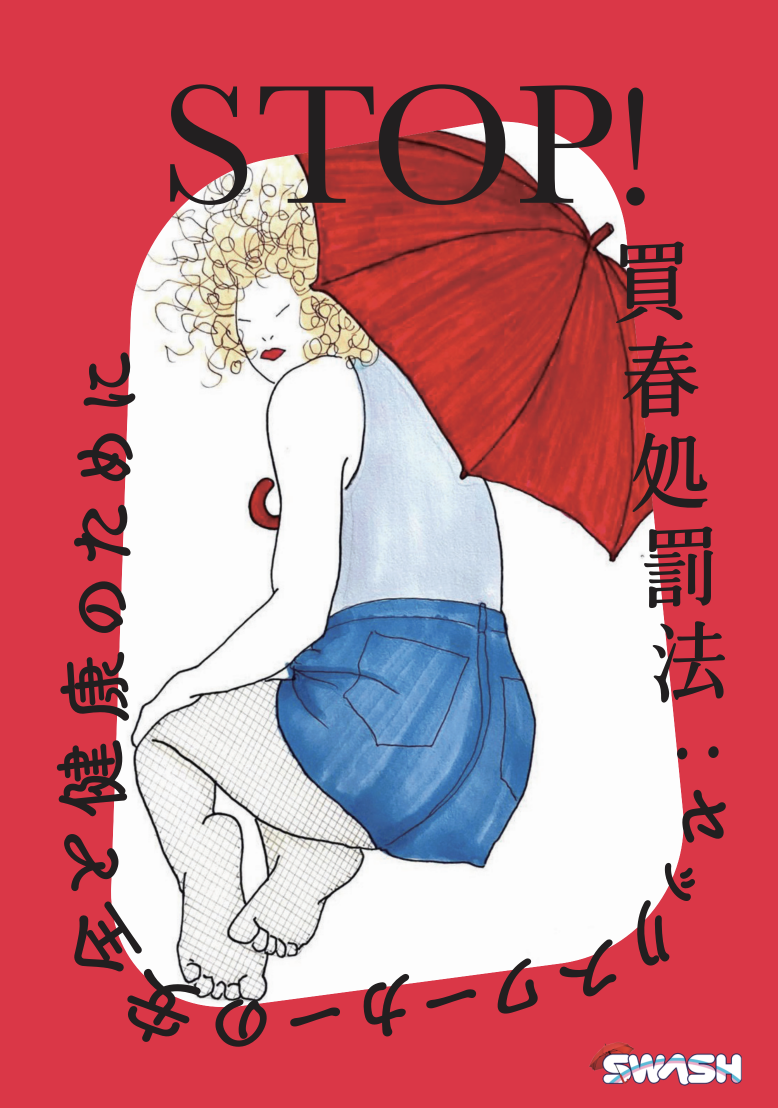
To prevent the introduction of the Nordic Model in Japan, we co-created our own media resource—a booklet titled “STOP! The Nordic Model: For the Safety and Health of Sex Workers.” To create the booklet, we wrote weekly reports on the Nordic Model as part of a crowdfunding campaign, which was supported by over 100 people. The booklet explains the negative effects of the law on sex workers and the reasons why we oppose it. It includes solidarity messages from Jules Kim, the Global Coordinator of NSWP; Summer of Scarlet Cha Cha, South Korea; Sarah-Marie Maffesoli of Médecins du Monde, France; and more.
The global sex worker rights community played a crucial role in the production of this booklet. Despite different contexts, sex workers around the world face shared issues, such as increased policing and criminalisation. We wanted to convey this message in our booklet as well.
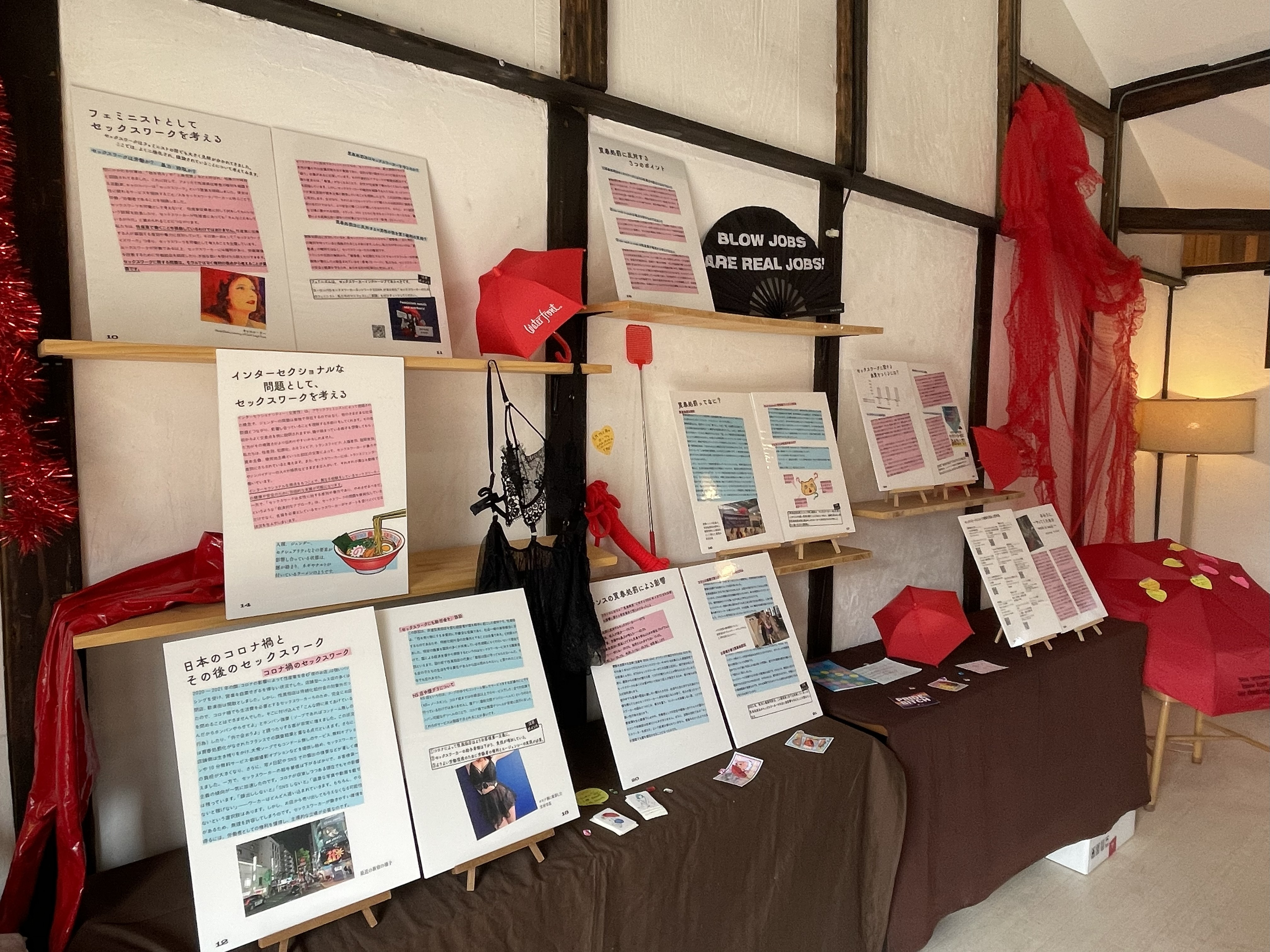
Creating our own media was necessary because the mainstream media never presented our perspectives, despite our repeated requests. The booklet has been distributed not only within Japan but also internationally, reaching sex workers, politicians, lawyers, feminists, students, and others. Through a collaboration with independent bookshops, we were able to co-host an online event and even hold an exhibition based on the booklet, where we discussed sex work and the law from various perspectives, including feminism, activism, and labour rights. The booklet served as a tool to connect us with more supporters and engage with diverse audiences.
There is substantial evidence that the Nordic Model has increased risks for sex workers in countries where it has been implemented. Globally, sex worker rights groups have produced extensive resources documenting the law’s harms. Through our network, SWASH has gathered and summarised these materials for inclusion in the booklet. For instance, some SWASH members visited several sex worker rights groups in Paris and heard about the effects of the law in July 2024. We also participated in the International AIDS Conference in Munich, where there was a press conference regarding the decision of the European Court of Human Rights on the case MA and Others vs. France. Although the court did not find France’s prostitution law to violate Article 8 of the European Convention on Human Rights, it recognised that the law has negative impacts on sex workers. During the event, we exchanged information about the Nordic Model with sex workers from various regions and countries. Furthermore, we interviewed a researcher who spoke with sex workers and other stakeholders, including the police, about how the law was introduced in the Nordic region and its impact on sex workers, particularly migrants. The global sex worker rights community played a crucial role in the production of this booklet. Despite different contexts, sex workers around the world face shared issues, such as increased policing and criminalisation. We wanted to convey this message in our booklet as well.
Recently, the necessity of criminalising clients was emphasised in the 6th Basic Plan for Gender Equality. We raised concerns that this approach does not reflect our voices and called for greater collaboration with sex workers in the development of laws related to sex work. For the safety and health of sex workers, the decriminalisation of sex work is essential. Any form of criminalisation, including the criminalisation of clients, does not improve the working or living conditions of sex workers and instead places us at greater risk. We will continue to fight against the Nordic Model by distributing our booklet, co-hosting events, and strengthening and extending solidarity with communities and allies."